
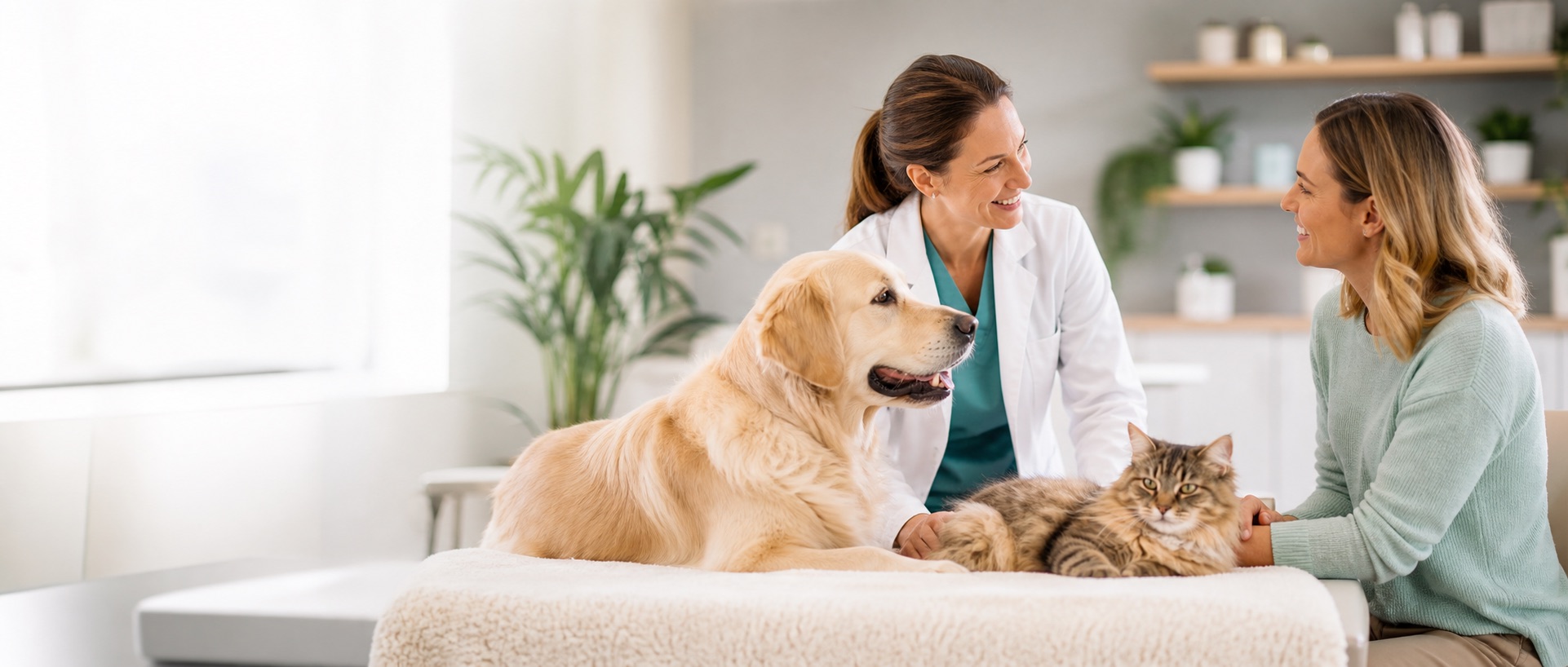
Owners are not only worried about diarrhea. They are worried about uncertainty.
In a veterinary clinic, gastrointestinal cases are common but emotionally charged. The owner sees diarrhea, vomiting, lower energy, appetite change or blood in stool. The questions behind those symptoms are more urgent: Is it infectious? Could it become severe? Are other pets at home at risk? Should the pet be isolated, hydrated, rechecked or referred for more testing?
If the discussion stops at “try medication and observe,” the pathway can feel unclear. GutSure is not designed to replace clinical judgment; it helps the veterinary team organize GI symptoms into explainable directions: infectious risk, parasite-related clues, intestinal inflammation or occult blood, and signals that call for further workup or follow-up.
Why one single test is often not enough
Diarrhea can look similar while the underlying causes are very different. A puppy may need screening for CPV, CCV, Giardia, Rotavirus or Cryptosporidium. A cat with acute GI signs may require attention to FPV, FCoV or Giardia. Chronic or recurrent cases may need additional context from Calprotectin, FOB, H. pylori, C. jejuni or C. difficile related markers.
A negative result from one traditional single test does not necessarily explain the case. A panel-based approach helps the doctor reduce repeated conversations, and helps the owner understand why isolation, hydration, parasite control, diet management, recheck or additional tests may be recommended.
When a customer asks why multiple items are needed, the answer is not “more tests are always better.” The answer is: similar symptoms can come from different causes, and screening the key directions first makes the next decision more grounded.
GutSure should be presented as a screening pathway
GutSure is not simply a larger bundle of items. It gives the clinic a sequence: first clarify urgent infectious risks, then look at common pathogen and parasite clues, then add intestinal health indicators when the case suggests inflammation, occult blood or recurrent disease, and finally translate the result into the next practical step.
This is useful for everyday clinic situations: puppies and kittens, animals from pet shops or kennels, multi-pet homes, recurrent soft stool, diet transition problems, follow-up after treatment, and distributor training for veterinary customers.
For clinics: less explanation burden, better follow-up compliance
Many clinics do not lack products; they lack a communication tool that doctors, nurses and front-desk staff can use consistently. GutSure changes “what to test” into “why we test”: why diarrhea should not be judged only by stool appearance, why infectious risk is screened early, why inflammation and occult blood may change the follow-up plan, and why the same pet may need different combinations at different stages.
When owners understand the logic behind the test result, they are more likely to accept follow-up, isolation advice, fluid support, diet changes or further diagnostic work. The test strip becomes both a diagnostic aid and a communication tool.
For distributors: sell a scenario, not a single item
Traditional pet IVD single tests are easily compared by price, packaging and lead time. GutSure can be presented as a canine and feline GI health screening series: puppy essential panels, expanded GI panels, GI Complete combinations, gastric-health checks, inflammation and occult-blood combinations, and C. difficile related profiles.
That structure helps distributors build displays, training sessions, trial kits and repeat-order programs. The clinic is not just buying a CPV or Giardia test; it is buying a clearer language for explaining GI cases to pet owners.
Clear boundaries make the product more credible
GutSure results should be interpreted together with history, physical examination, imaging, hematology, biochemistry, fecal examination and local veterinary guidelines. Rapid screening cannot replace a complete clinical workup for severe dehydration, persistent blood in stool, very young animals or immunocompromised patients.
Because the boundary is clear, the value is stronger: GutSure helps doctors find clues earlier, helps owners understand risk faster, and helps distributors move pet GI diagnostics from item-based selling to scenario-based solutions.
Next step
For local launch, clinic training or OEM/ODM projects, contact Safheal for product-combination suggestions, packaging materials and channel support.
View the GutSure platform →